Leading in a sector that waits: Dijkhoff puts AI to work on BPKV tenders, specifications and CROW 400
Where most civil engineering firms are still waiting, Dijkhoff B.V. put its whole company through a tailored training day: management, work preparation, QHSE, HR and administration in one group of six, everything tested on their own work such as BPKV tenders, specifications and CROW 400. Recommendation score: 8.5/10 across six evaluations.
The challenge
Dijkhoff started in 1914 trading bricks and coal and is now a family business of over a hundred years in ground, road and water works, with demolition, nature engineering and circular recycling alongside it. That it leads is not a story we are pinning on them: the company sits at level 5 of the CO2 Performance Ladder, the highest rung, and calls that certification the natural consequence of how it works. When AI entered the craft, in BPKV texts, specifications and estimating, the reflex was no different. Everyone was already using ChatGPT, a third also Microsoft Copilot.
So the issue was not a lack of interest, but that it was happening unmanaged: everyone on their own, without a shared standard. Management therefore pulled it forward instead of letting it happen, in a sector that consistently ranks at the bottom on digitalisation. And with the requirements you would expect from an ISO and VCA certified company: the quality and accuracy of AI output has to be verifiable before anything reaches a client (83% put that first) and information security has to hold up (67%). On top of that came the labour shortage in the sector, named by four of the six: whoever learns now where AI takes over work will be ahead later.
The approach
We started with an intake among all six, so not with an off-the-shelf programme. That intake immediately showed why company-wide was the right call: the baseline ranged from just starting out to well experienced (average 2.8 out of 5, range 1 to 5) and for five of the six this was the first AI training of their career, because nobody in the sector had offered one before. So: one day in Heeswijk-Dinther, one group, from management to QHSE and work preparation, so that afterwards there was one shared language instead of six.
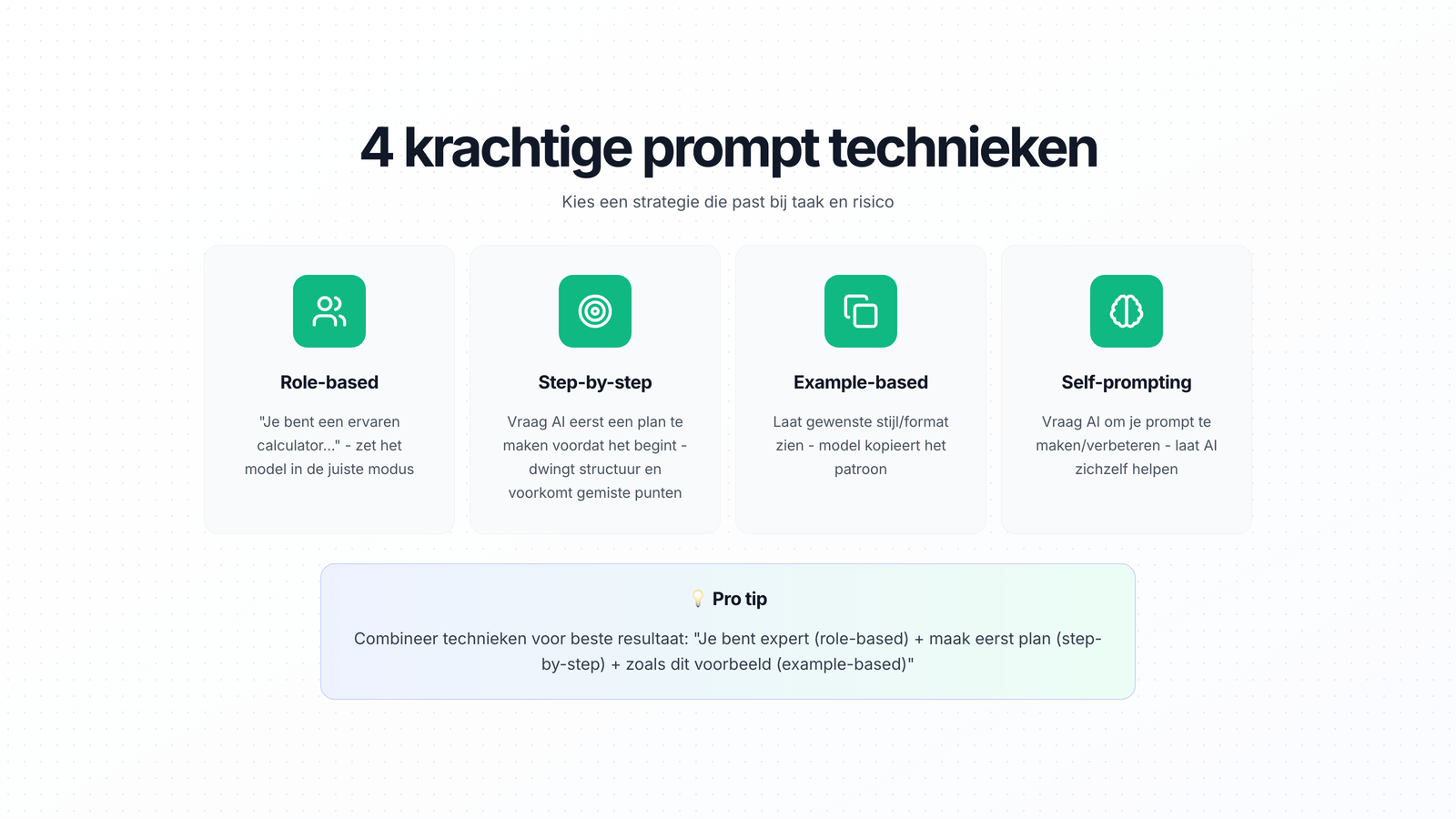
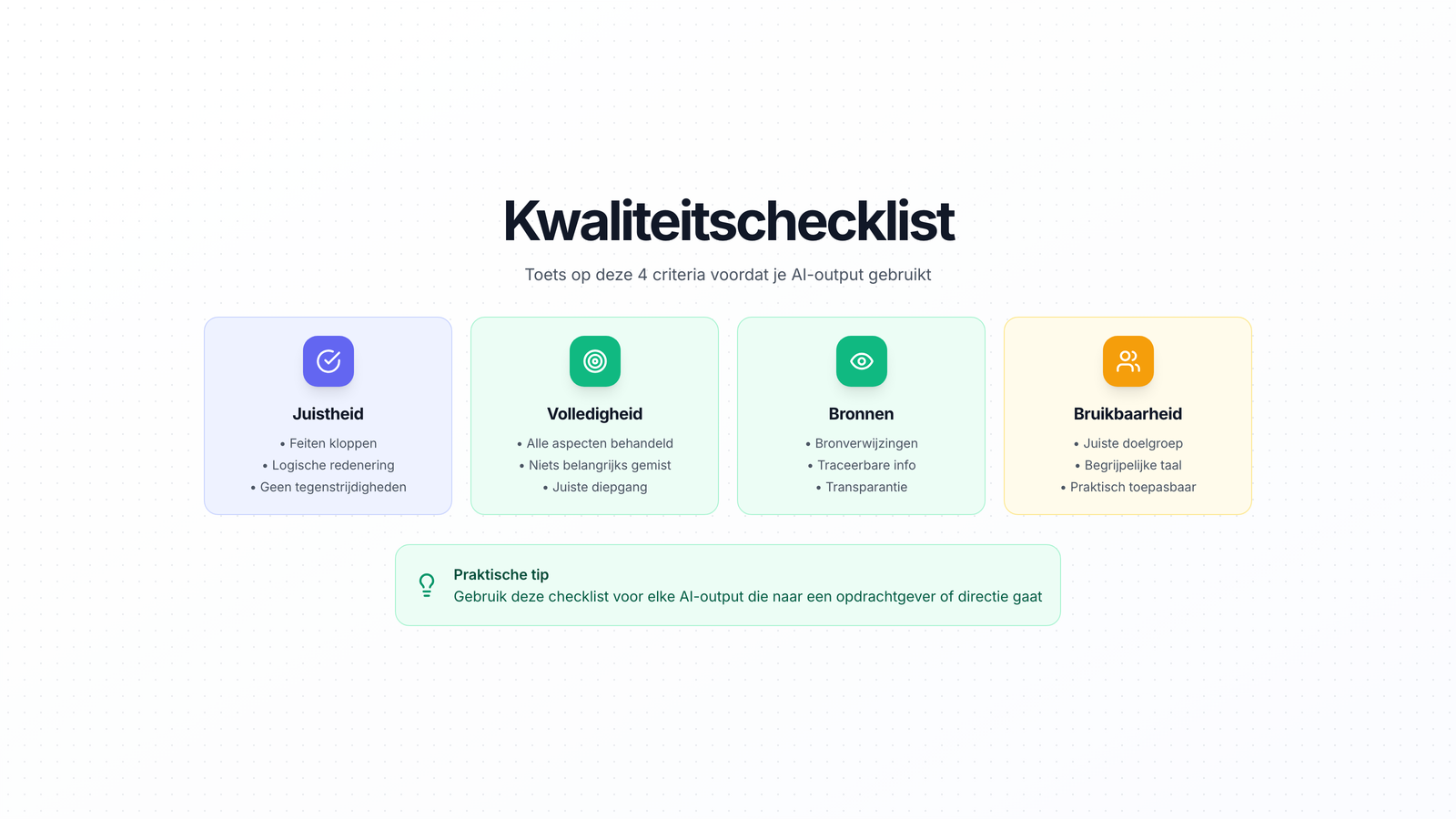
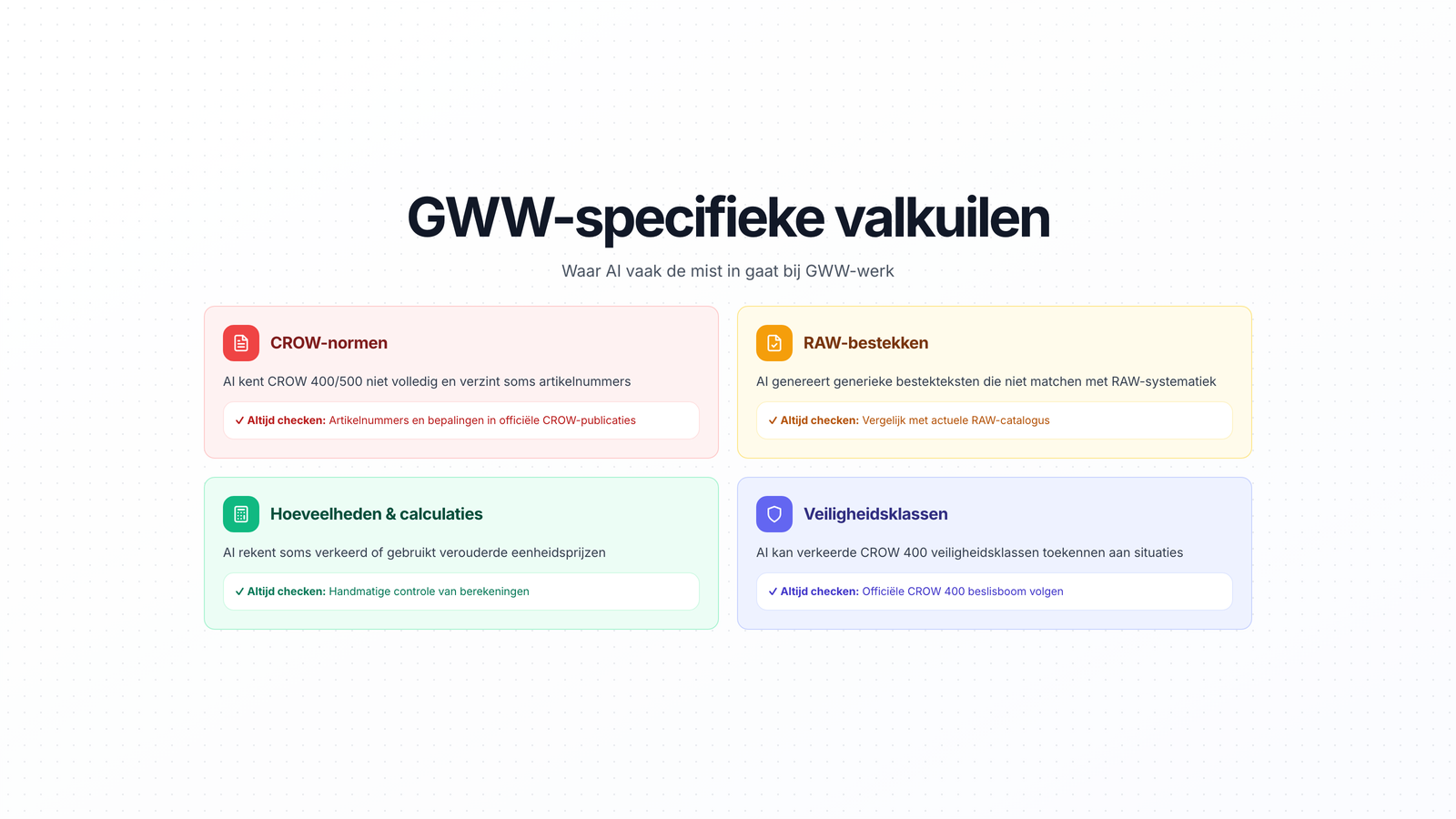
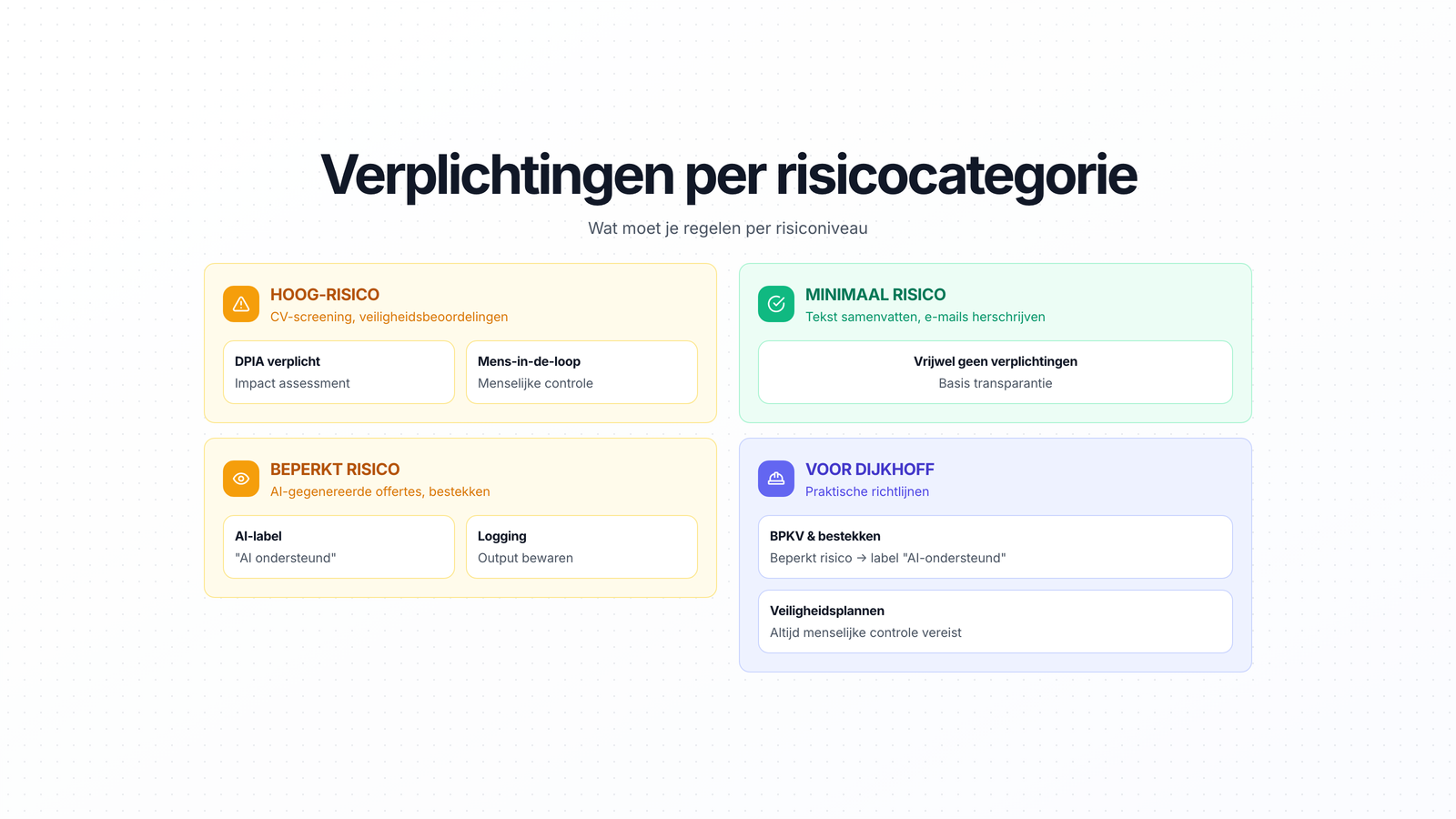
The morning covered how generative AI works, effective prompting, reliability and privacy (from hallucinations to the transparency obligation in the AI Act), assessing AI output, and the tools themselves including AI agents. After lunch it was all about Dijkhoff: BPKV tenders, breaking down specifications, CROW 400, soil reports and route optimization, ending in a workshop where everyone worked on a task of their own. No generic examples, only real work.
The result
The training scored a recommendation score of 8.5/10 across six evaluations, with a trainer rating of 4.8/5 and learning goals at 4.0/5. More telling: five of the six participants named at least one task themselves that they will use AI for. That is the number that counts, because this is not about enthusiasm but about work that actually goes differently.
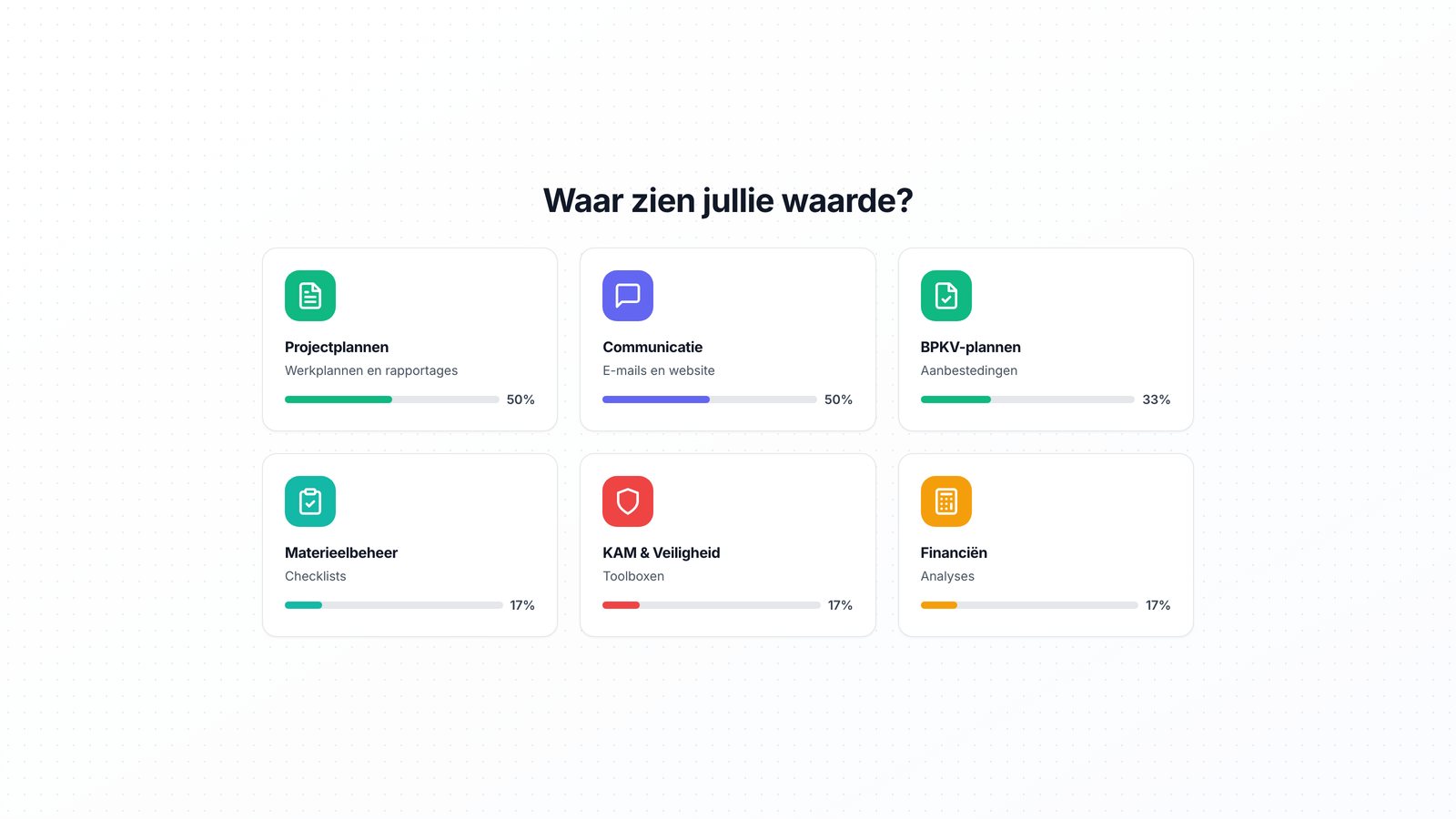
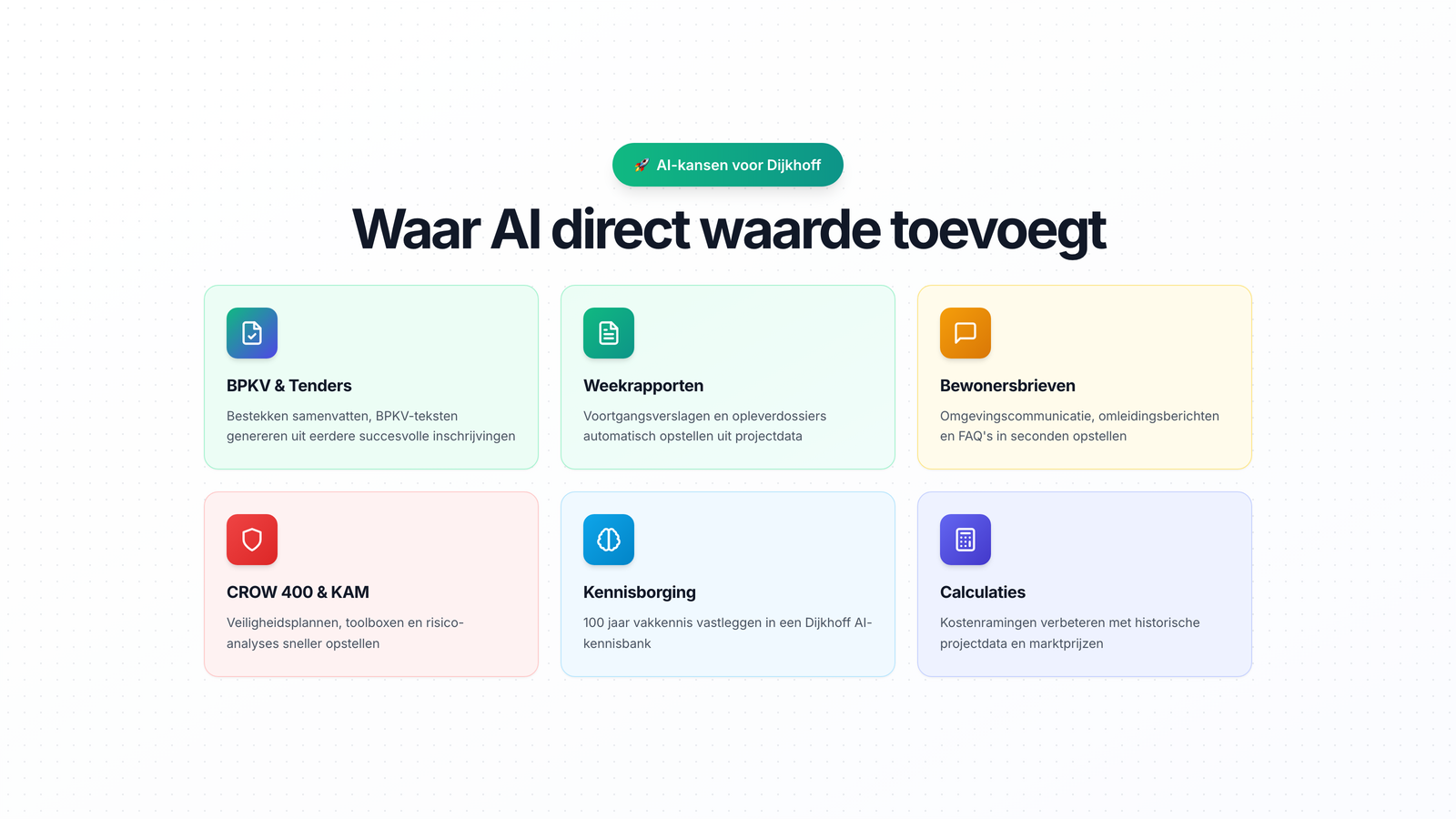
Top of the list were weekly reports, BPKV tenders, specifications, resident letters, estimating and route optimization for transport. We also showed what is possible with CROW 400 and QHSE documentation and with handover dossiers built from project data. And then the plan that almost nobody in this sector is ready for yet: an in-house AI knowledge base that unlocks over a hundred years of expertise, so the experience of the people about to retire does not walk out of the door with them. Dijkhoff now has what most civil engineering firms still lack: a group that knows what AI can and cannot do, and a starting point for internal policy that does not come from a template.
Inside the training
Six slides from the Dijkhoff training day.
“An important awareness of this new way of working.
A similar result for your team?
We map your use case, build the first Skill or agent, and hand it over to your own people. Fixed price, fixed timeline.