190 weighbridge tickets in under two months, and nobody has to retype a paper slip into Robaws anymore
Published
Dijkhoff B.V. has been a contractor in civil engineering, demolition and recycling for more than a hundred years, with its own yard in Heeswijk-Dinther where companies and private customers drop off waste and collect aggregate and sand. There the Weighbridge Operator AI agent turns every weighing into a digital weighbridge ticket, and almost every ticket is in Robaws as an invoice line within seconds.
The challenge
Dijkhoff demolishes, crushes and reuses. Concrete and masonry rubble goes through its own crushing plant and comes back as certified aggregate, and in its VANG centre beams, doors and window frames from demolition projects get a second life.
The weighbridge at the yard on the Heeswijkseweg is where all of that comes in and goes out again, six days a week.
And there it still ran on paper: the driver pulled onto the bridge, Uniwin recorded the weight, a paper slip went along, and the finance team then retyped customer, waste group and weight into Robaws to be able to invoice. The stock per material stream was kept separately.
Every weighing was handled twice, and every typing error only surfaced when a customer queried their invoice.
The approach
The project started with a master plan and was built phase by phase behind its own switch, so every part could go live on its own.
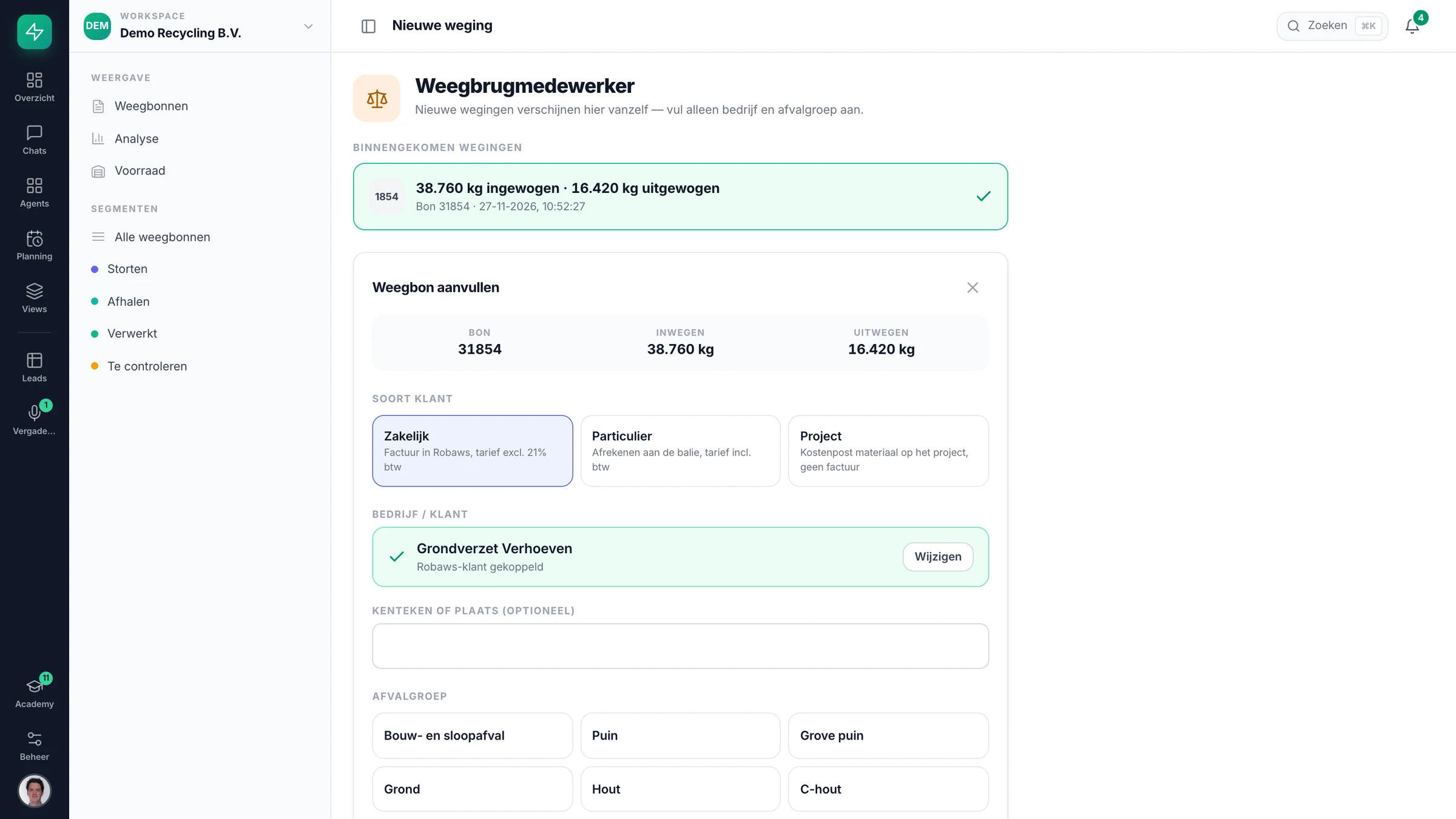
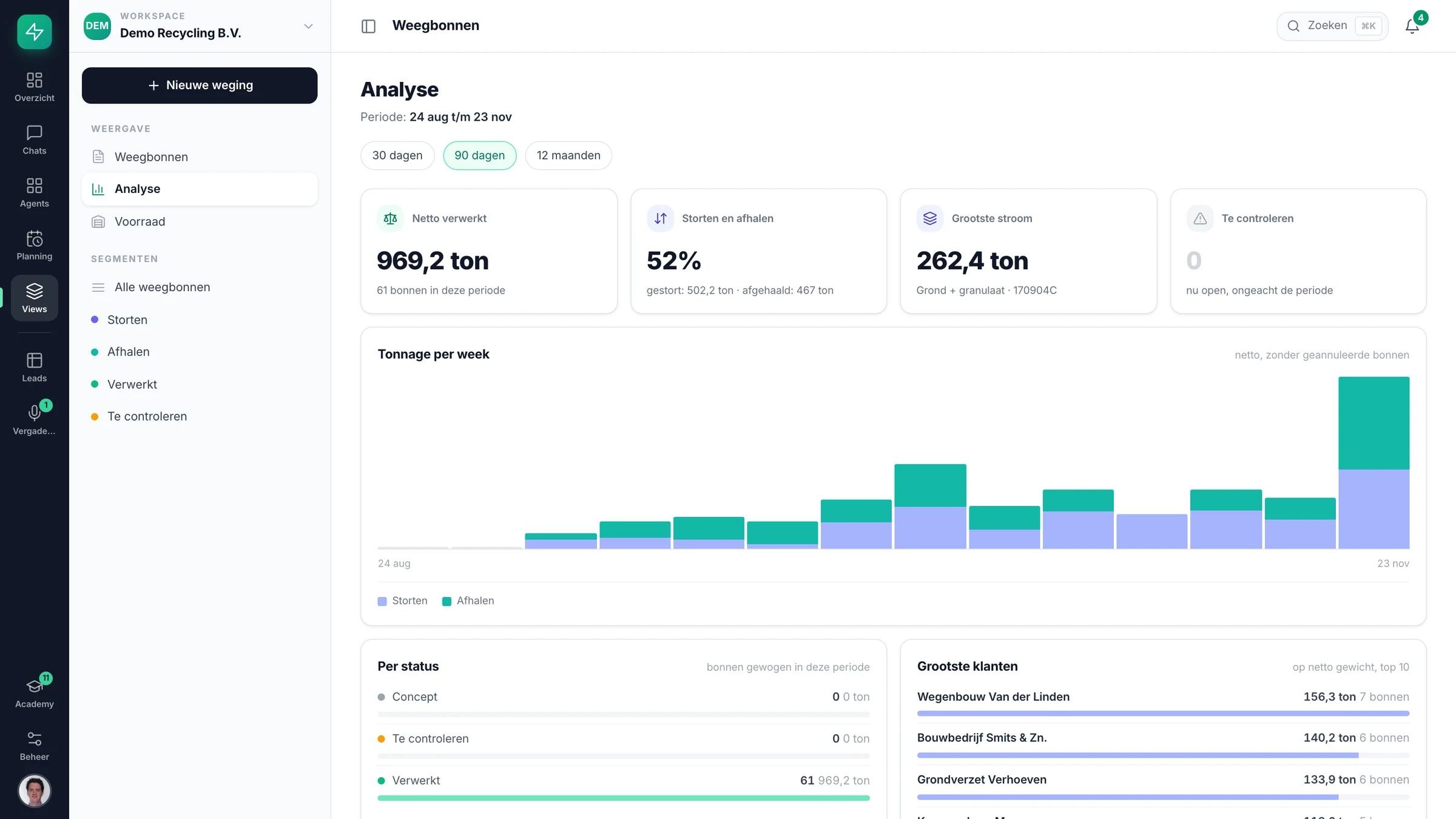
A tablet on the weighbridge shows the New weighing screen. As soon as a truck has been weighed, the weighing appears there by itself with ticket number, weight and time filled in; the operator only adds what the bridge does not know: the customer, the waste group and whether the load is being dropped off or collected. Typing the customer brings up earlier customers, linked to their customer record in Robaws.
Dijkhoff's fifteen material streams, from rubble and wood to mixed aggregate and masonry sand, are in there with their rate and their Robaws article. Fixed items such as a mattress, a sofa or a trailer that does not go over the bridge are tapped in as a separate line.
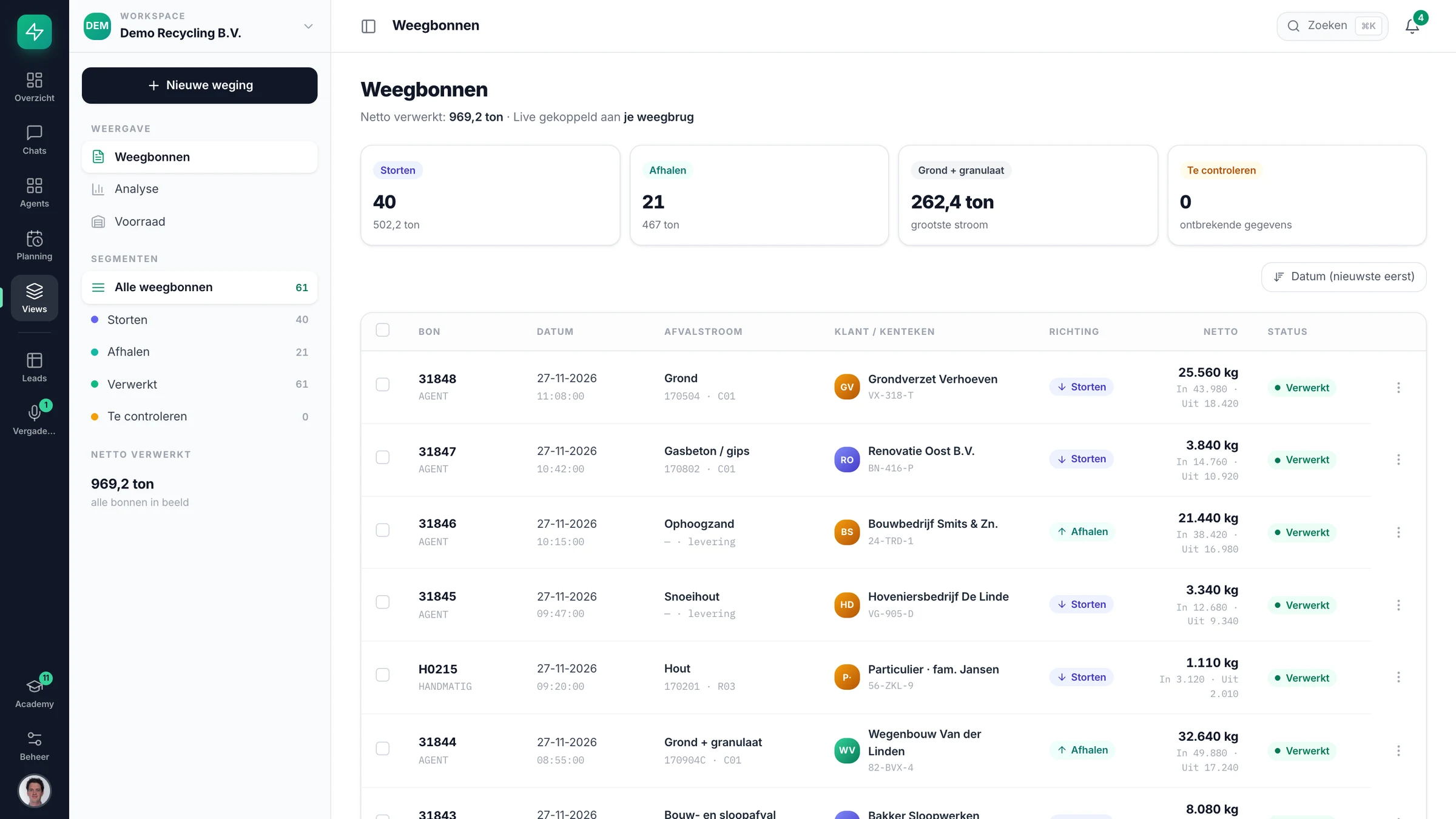
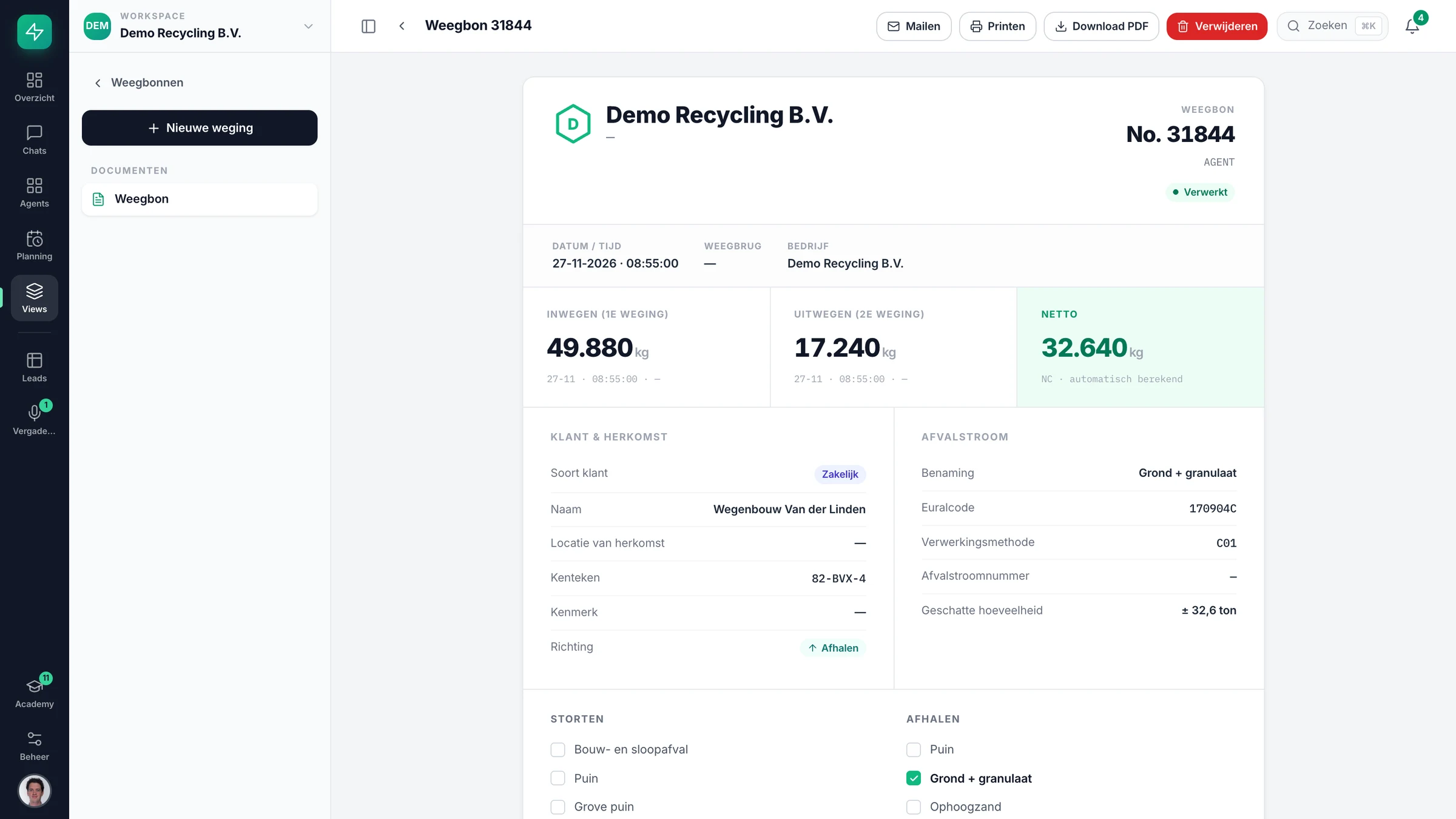
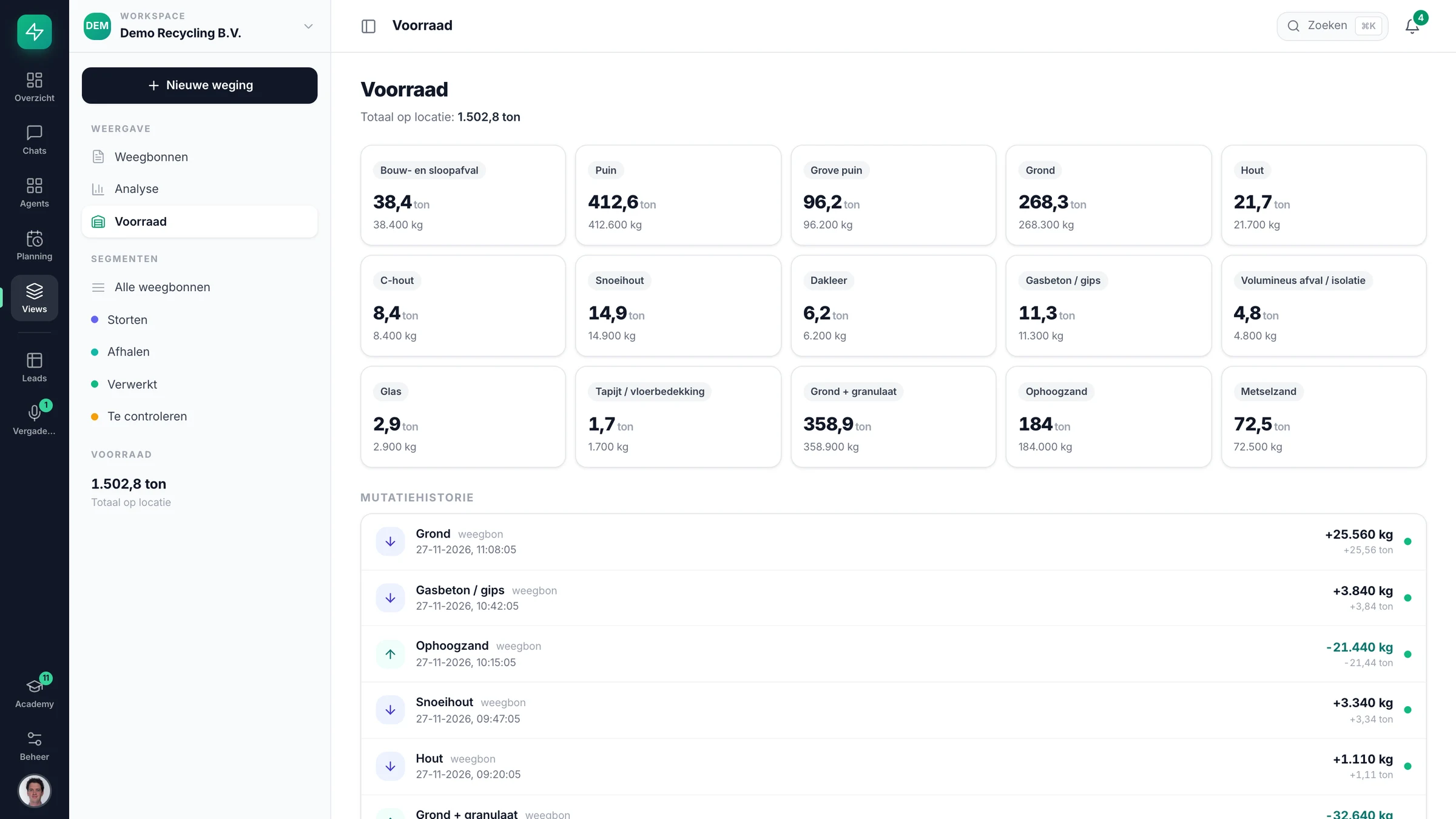
Every confirmed ticket lands in the Weighing tickets view, goes to Robaws as a draft invoice line and books the stock of that material stream up or down, visible in the Stock view. With a photo of the load, the AI checks whether it matches the chosen waste group.
If the reading falters, there is manual entry with its own number range. Within a week of the delivery being approved, the first ticket was in.
The result
Since going live, every weighing runs through the agent: drop-offs and collections, business and private, across all fifteen material streams. At the time of publication that came to 190 digital weighbridge tickets.
97% of the tickets are in Robaws as an invoice line, with a median of 7 seconds between confirming the ticket and the line in Robaws; what remains is almost entirely private customers, who pay at the counter.
Every ticket also books the stock in Robaws up or down, and fixed items such as a trailer of soil go along as a separate line. Most of the weight leaving the yard is mixed aggregate, Dijkhoff's own recycled material, and that stock is now up to date with every weighing too.
Nothing is retyped anymore, so no new typing errors end up on an invoice.
At the yard
The screens where the weighbridge operator creates a ticket and finance finds it again, filled with fictitious sample data.
“Good! The collaboration went smoothly, with short lines of communication.
A similar result for your team?
We map your use case, build the first Skill or agent and train the people who will run it afterwards.