Den Helder's board advisors learn to build their own Copilot agents in two days, within the municipality's own AI guidelines
Published Updated
The Municipality of Den Helder chose a two-day training for its board advisors, with a week of practice on real work in between. In the AI training for board advisors, three advisors worked on their own documents, from council briefings to council questions, and finished with their own Copilot agent and an agent plan for the team. The recommendation score came out at 9/10.
The challenge
In Den Helder, board advisors sit between the organisation and the Municipal Executive. Each of them writes or reviews more than fifteen administrative documents a month, and much of what crosses their desk is politically sensitive or confidential until the decision is made. AI was not new to them: Copilot on the work account and ChatGPT were already used to summarise documents and give texts a more formal tone. They had not had an AI training yet.
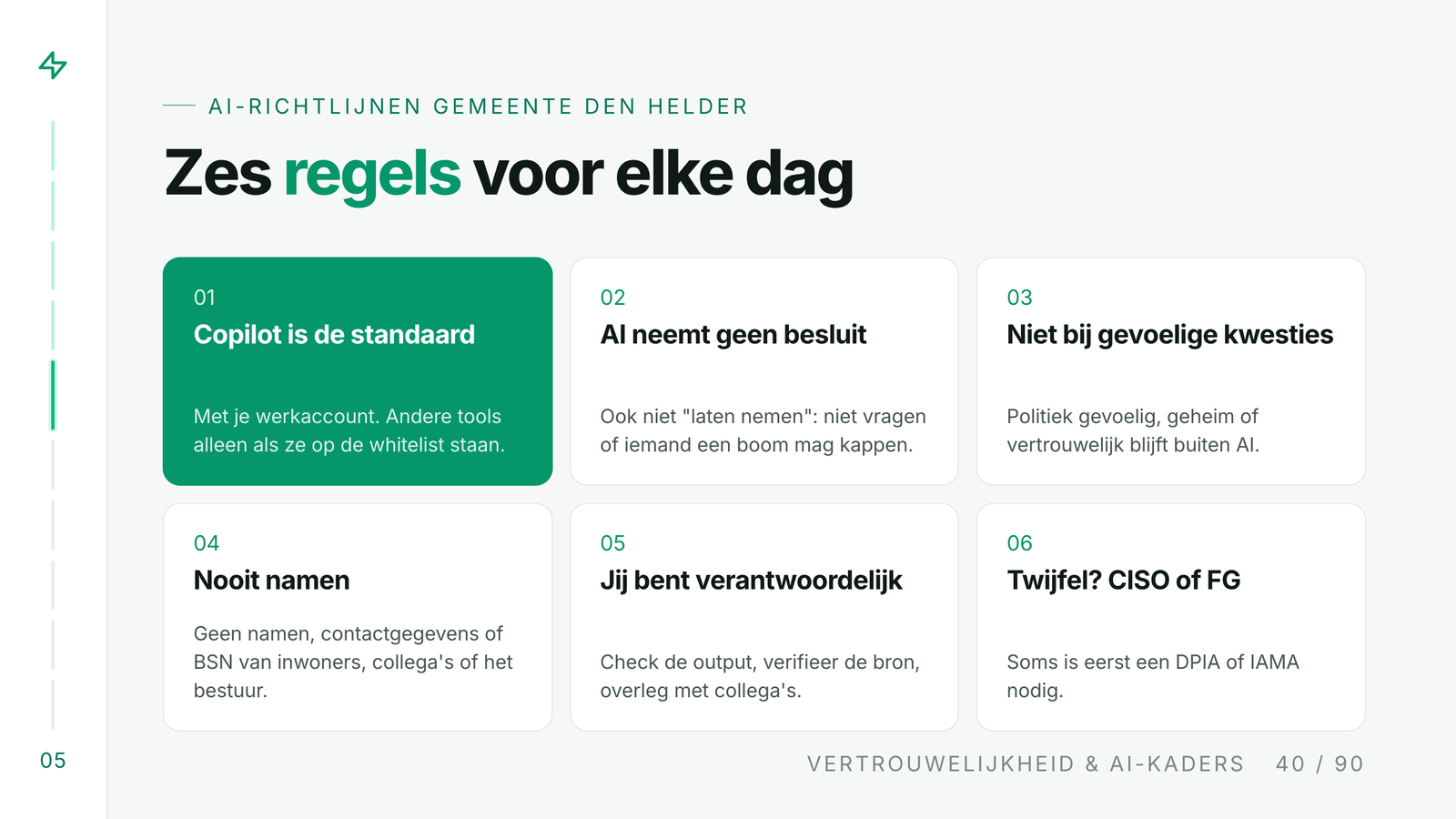
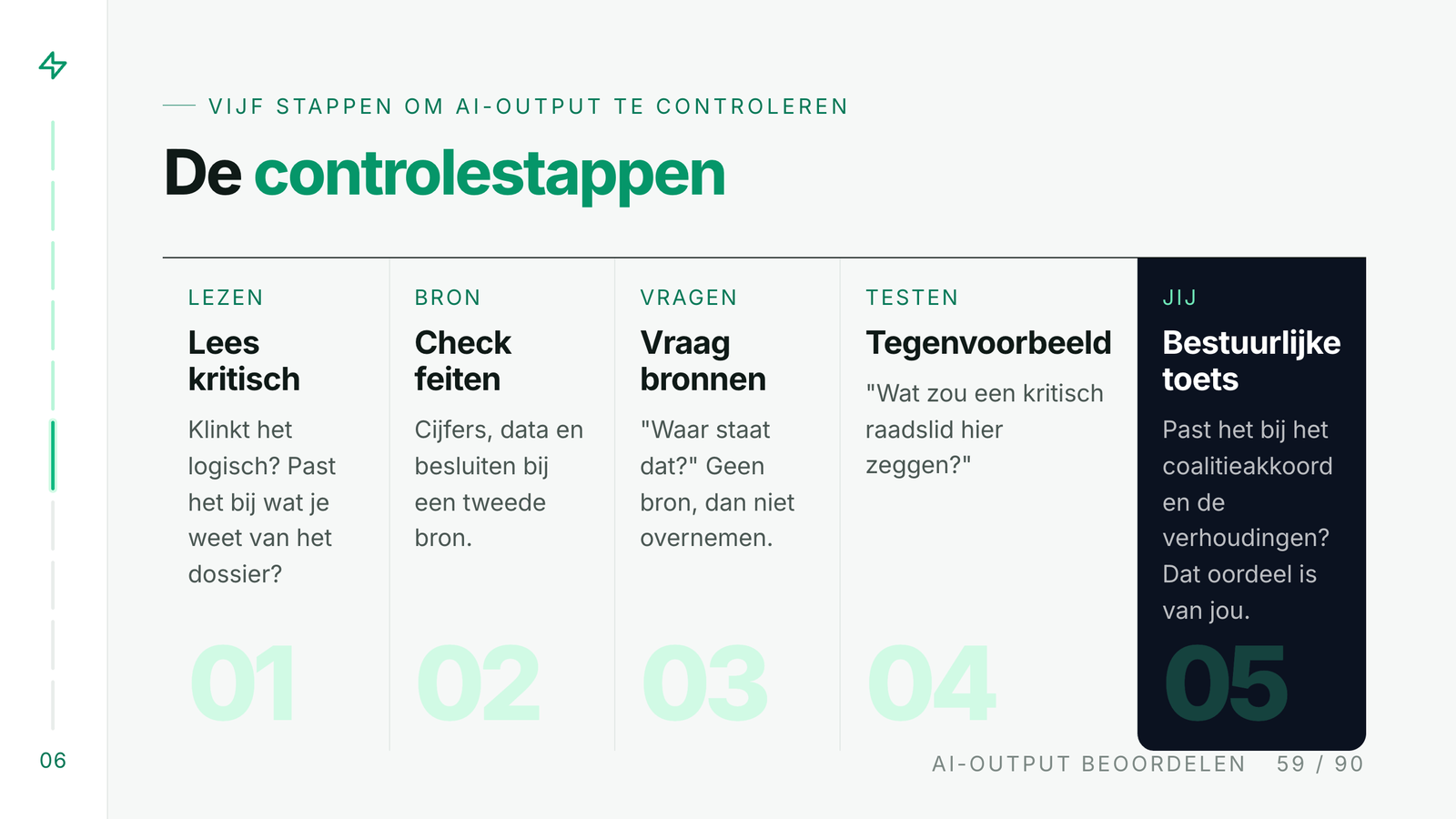
The municipality had already laid the groundwork itself. Den Helder has its own AI guidelines, drawn up by the information manager together with the data protection officer and the CISO, with Copilot on the work account as the standard and stricter than the law on several points. What was still missing showed up in the intake: checking output was not yet a fixed habit, the AI Act was little known and asking the right question remained hard. The advisors wanted a usable first draft faster, certainty that it is correct before a document goes to the Executive or the council, and a safe way of working with sources.
The approach
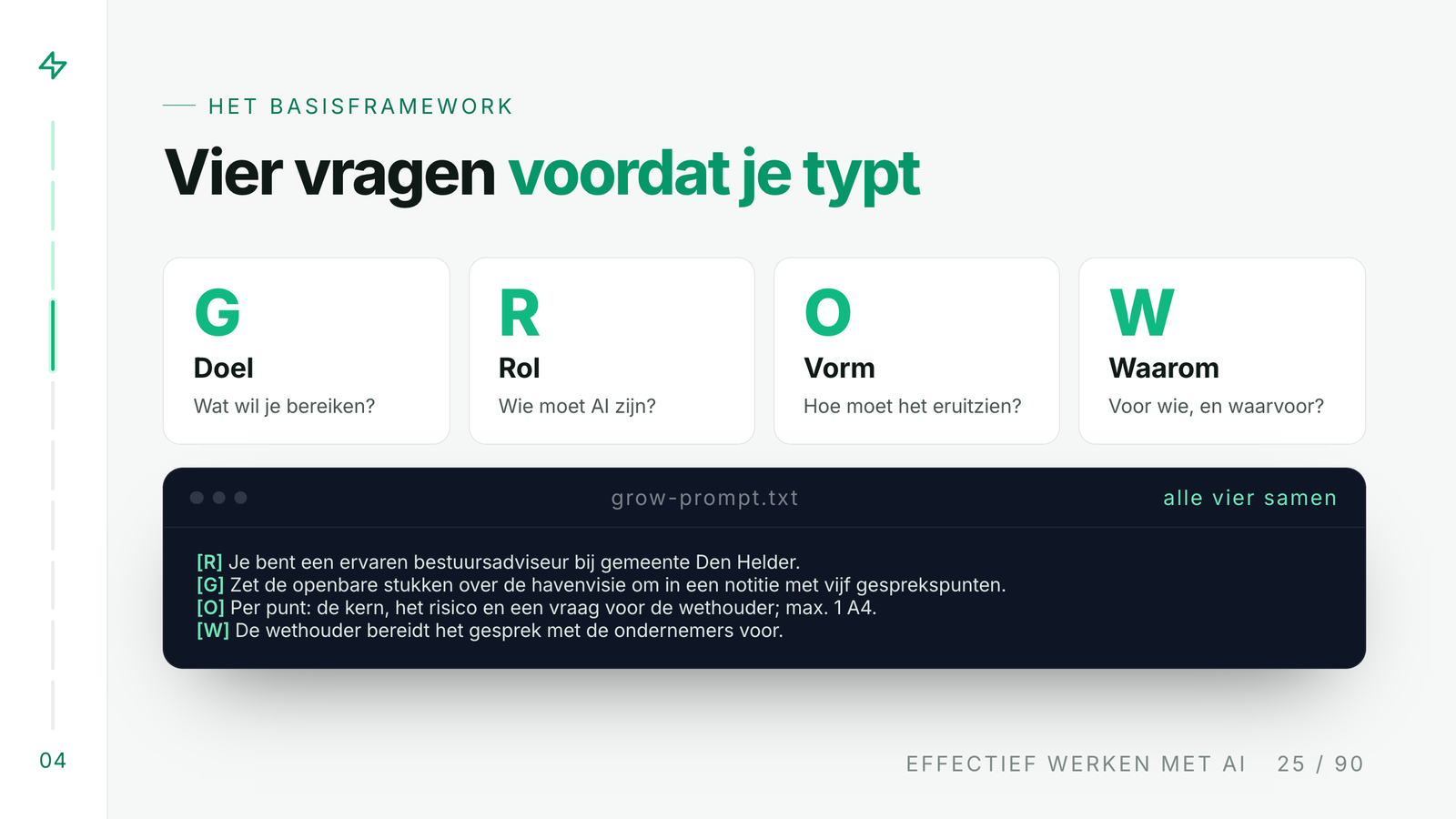
We started with an intake among the group and built two tailored days on top of it. Day 1 covered how generative AI works, effective prompting, assessing AI output and the frameworks: Den Helder's AI guidelines alongside the GDPR, the Open Government Act, the Public Records Act and the AI Act, with the AI policy of the Municipality of Helmond for comparison. Every exercise was about recognisable work, such as a briefing to the Executive on extending a grant or a forty-page council proposal in five points. The group also received a prompt pack of 18 prompts, written from the intake and within their own guidelines: Copilot only, never names.
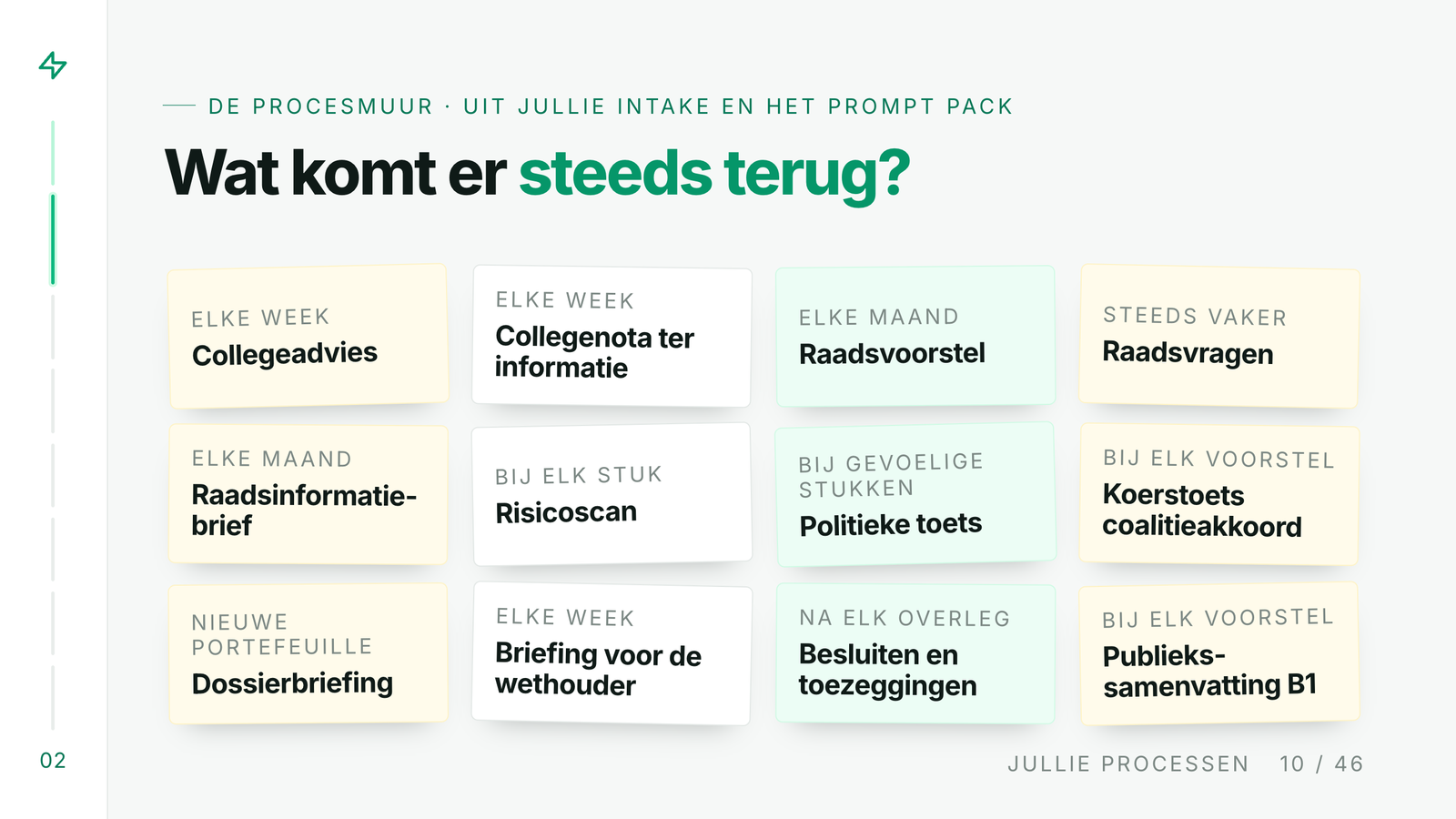
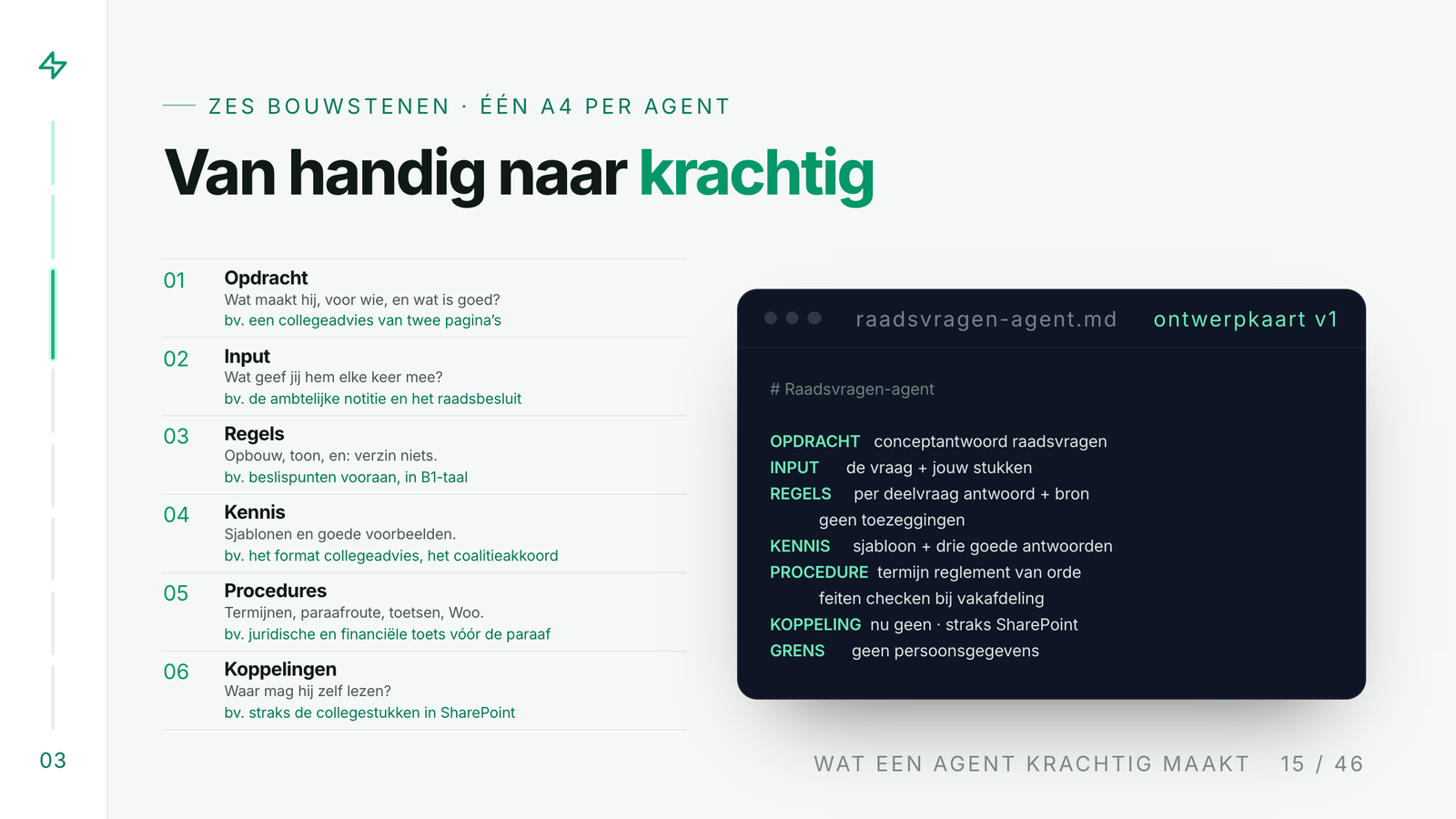
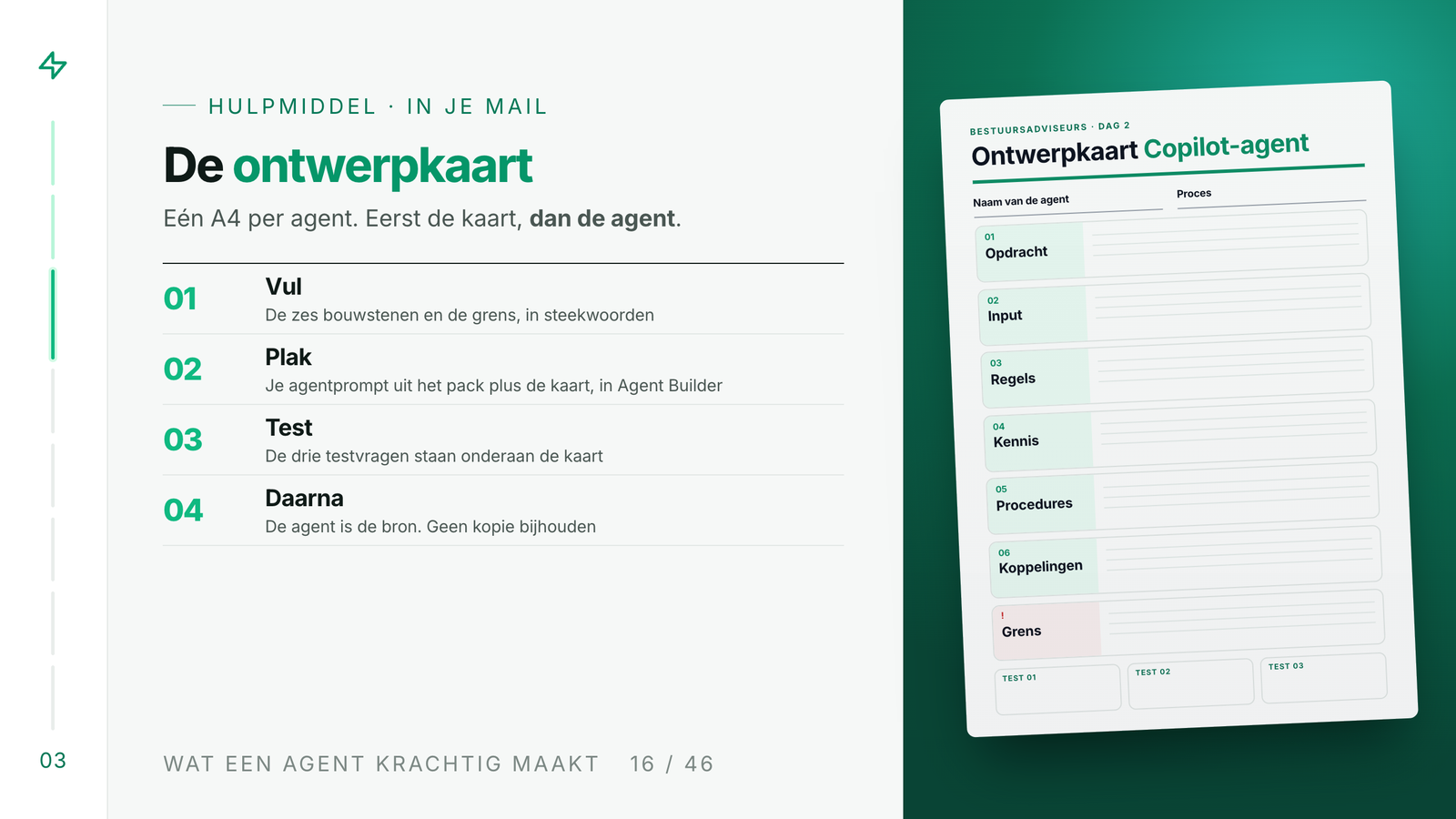
Between the two days there was a week to try three prompts from the pack on real work. Day 2 was about agents. On a process wall the group listed everything that keeps coming back, from council briefings and council questions to risk scans and briefings for the alderman, and chose the processes where an agent adds the most. For each process everyone designed an agent with a task, input, rules, knowledge and procedures, built it in Copilot and tested it.
The result
Two of the three participants filled in the evaluation. Their recommendation scores were 8 and 10, an average of 9/10, and both gave the trainer, the learning goals and the training as a whole the highest score (5/5). Both say they can apply what they learned in their work straight away. One participant named building for practice as the most valuable part, because it can be applied right away.
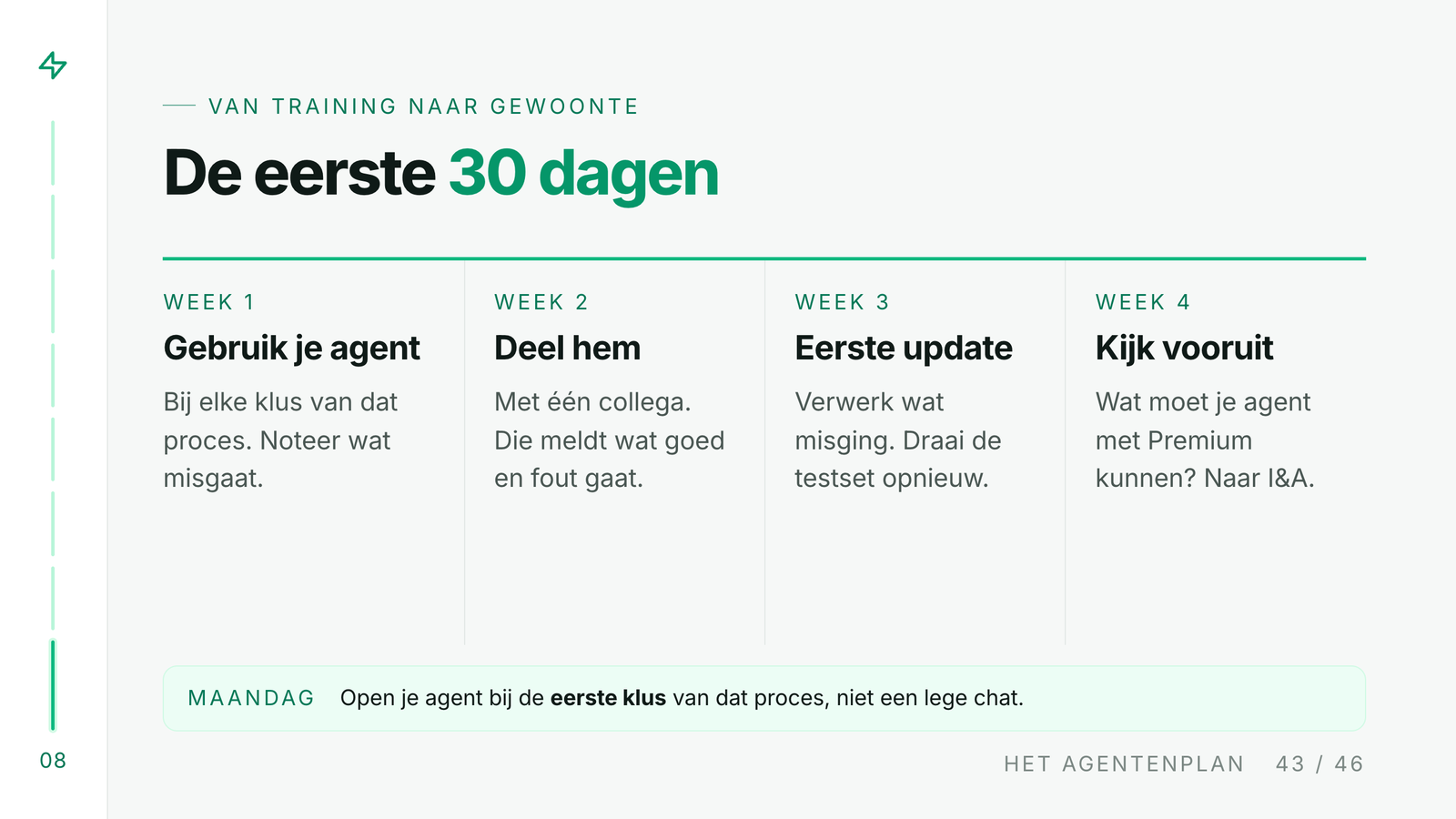
Board Advice finished with an agent plan: five agents, from a Council Briefing assistant and a Council Questions assistant to a devil's advocate that checks every document politically, with one owner per agent and a plan for the first thirty days. For the move to Microsoft 365 Copilot there is a list of what needs to be arranged. The principle stayed what the guidelines already said: the agent writes the first draft, the advisor gives the advice.
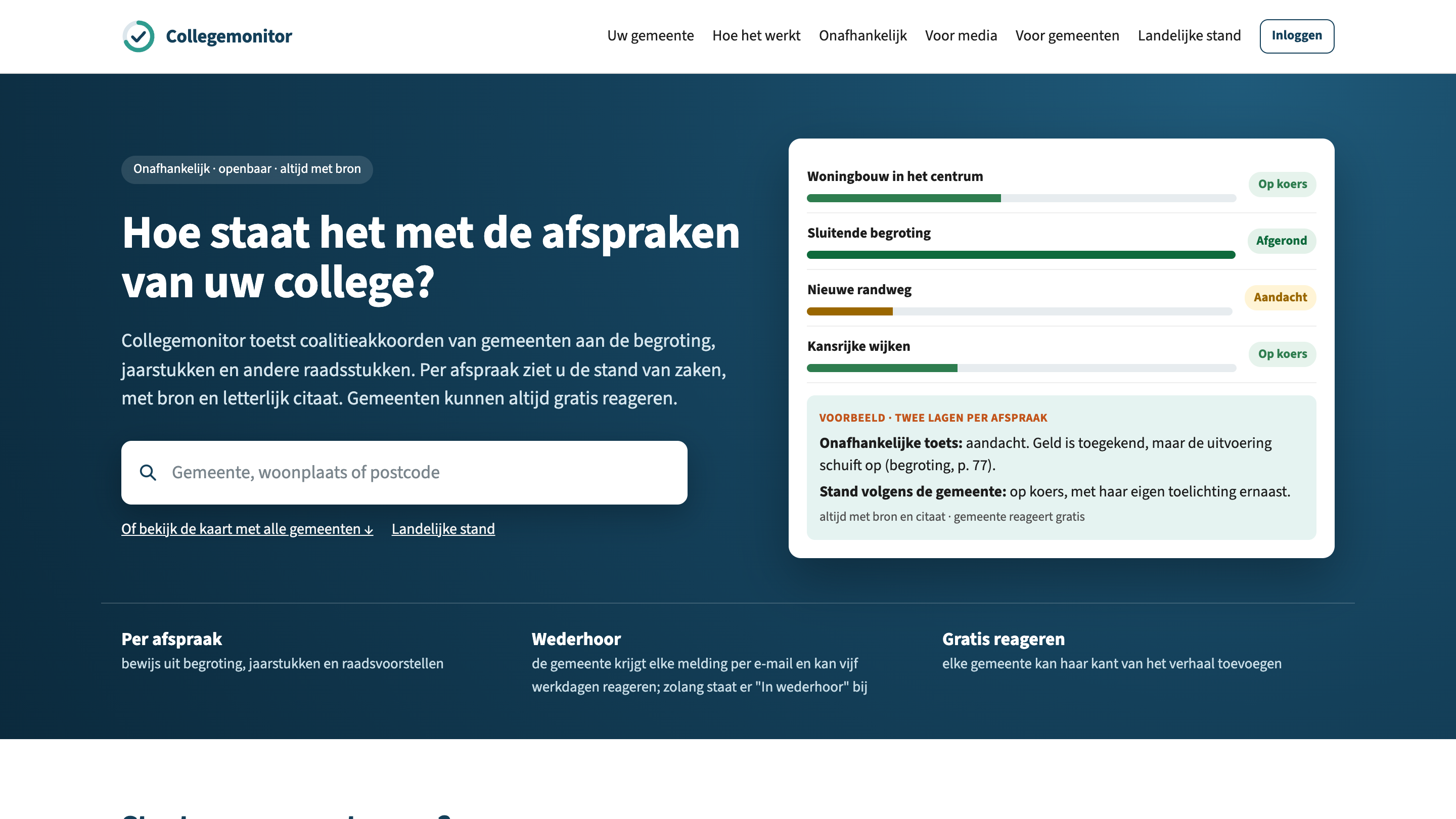
During the training we also built a tool that tracks how well the council follows its own policy plans. It later grew into the national Collegemonitor. One lesson for a next group comes from the same evaluation: gather even more concrete everyday applications up front.
Inside the training
Seven slides from the two training days for the board advisors of Den Helder, and the Collegemonitor that grew out of it.
“As a layperson, this is a fantastic first introduction to AI, after which you can make enormously rapid progress in working with AI.
A similar result for your team?
We map your use case, build the first Skill or agent and train the people who will run it afterwards.